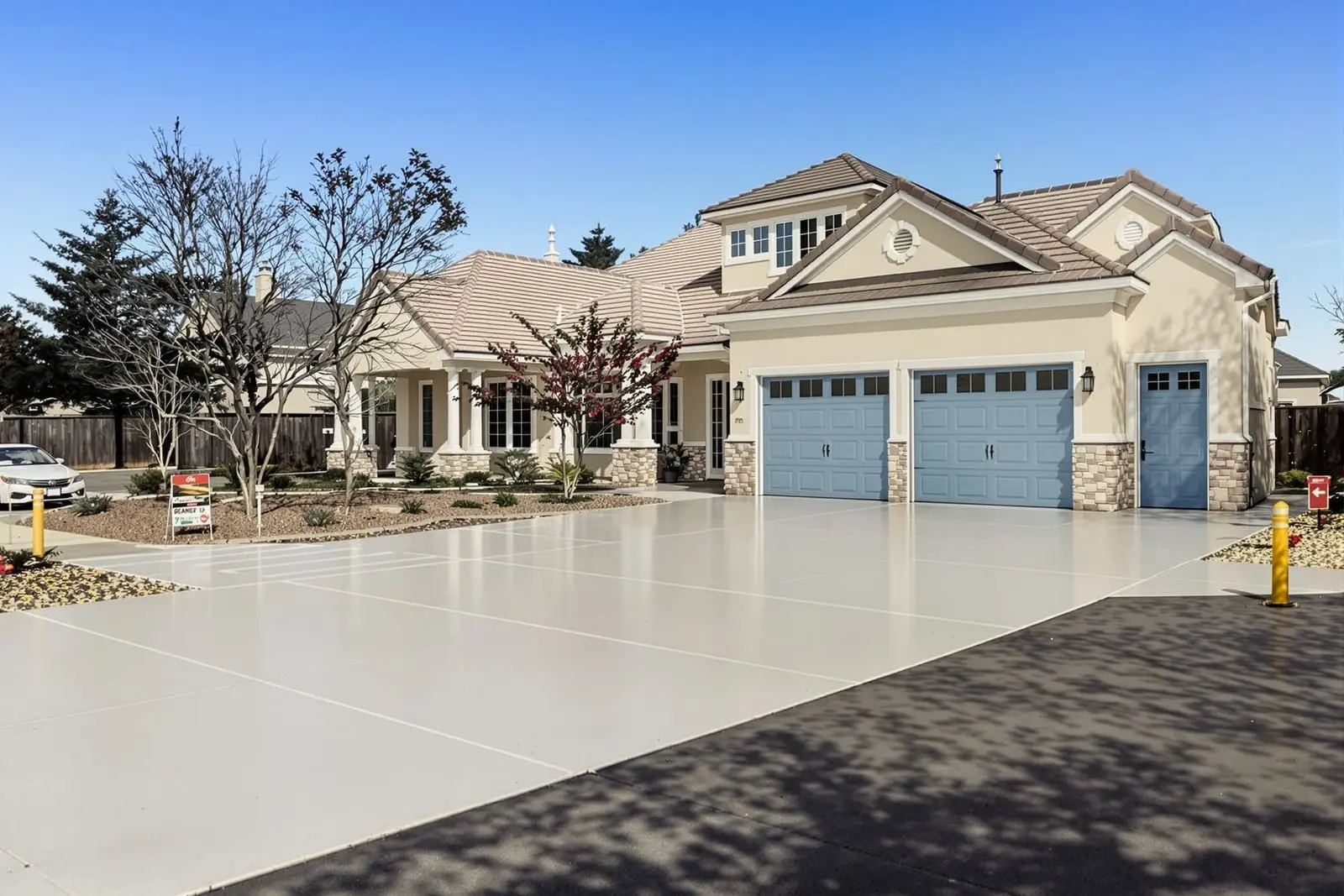
We handle commercial concrete paving in Omaha, NE for businesses, facilities, and developers. Our crew installs large scale flatwork for access drives, loading areas, dumpster pads, and site concrete. We schedule efficiently to reduce downtime and coordinate with other trades. Get durable commercial concrete installation that stands up to traffic, weather, and heavy use.
Primetime Concrete Omaha provides professional commercial concrete paving throughout Omaha, NE and the surrounding area. Our licensed, insured crew delivers safe, clean, on-time work with a free estimate before anything begins. Call (402) 838-2266 or request your free quote.
Commercial Concrete Paving for Omaha Businesses
Commercial concrete paving is a long-term investment in how your property looks, functions, and holds up to Nebraska weather. At Primetime Concrete Omaha, we focus on getting the details right for local businesses, not just pouring a slab and leaving.
In Omaha, commercial concrete is usually the best choice for high-traffic areas like parking lots, drive lanes, loading zones, dumpster pads, and walkways because it stands up better to freeze-thaw cycles than many asphalt installations. The tradeoff is that concrete needs careful planning before we ever bring a truck on site. We start by looking at how your property is used: vehicle weights, traffic patterns, turning movements from delivery trucks, snow plow routes, and drainage paths. A restaurant off 120th and Maple has different needs than a warehouse by the I-80 corridor, even if the square footage is similar.
Primetime Concrete Omaha will walk the site with you, sketch out the layout, and talk through expansion joints, thickness requirements, and how to manage slopes so water moves away from your building. That early planning is what separates a surface that lasts 30 years from one that starts spalling and cracking after a few winters.
How Our Commercial Concrete Paving Process Works
For most Omaha commercial concrete paving projects, the work follows a clear sequence so you know what to expect and how it will affect your business operations.
1. Site evaluation and layout: We verify property lines, existing elevations, and underground utilities. Many local properties have old parking expansions that were never documented, so we confirm thickness and base conditions where we tie into existing pavement.
2. Demolition and removal: We remove failed asphalt or concrete, then haul it to a proper recycling or disposal site. On many older Omaha lots, we find thin asphalt over soft subgrade. If we pour new concrete directly over that, it will crack, so we remove what will not support the new slab.
3. Subgrade prep: We regrade the soil to the right slope, then compact in several passes with plate compactors or rollers. In areas with known soft clay, like parts of West Omaha, we may undercut and bring in additional base rock so the slab does not settle. We often use a crushed concrete or limestone base to provide structure and drain water.
4. Forms and reinforcement: We set wood or metal forms to control thickness and edges. For parking lots and drive lanes, we typically pour 5 to 7 inches of concrete. Heavy truck areas or dumpster pads may go 8 inches or more. Depending on the load and your budget, we add steel rebar grids, dowel bars at joints, or welded wire mesh to control cracking and keep the slab tied together.
5. Pouring and finishing: We place the concrete using chutes or pumps, then screed it to level. For commercial paving, we typically use a broom finish for traction, especially with Omaha snow and ice in mind. In loading areas, we might use a slightly heavier broom or tined texture to reduce tire slip.
6. Joints, curing, and sealing: We cut control joints at specific intervals to encourage concrete to crack in straight, controlled lines instead of random patterns. We apply curing compounds or wet curing methods to slow moisture loss, which is critical in hot, windy Nebraska summers. After curing, we can apply a penetrating sealer to help resist salt and deicing chemicals.
Throughout the project, Primetime Concrete Omaha coordinates with you on access so you can keep your business open as much as possible. We often phase concrete paving in sections so your customers and employees still have safe routes into the building.
Design Options and Materials for Commercial Concrete Paving
Concrete paving for businesses does not have to be plain gray unless you want it that way. Primetime Concrete Omaha can help you choose options that match your property type, traffic levels, and brand image.
For color, integrally colored concrete is the most durable because the pigment is mixed throughout the load. It is popular for entry plazas, walkways, and outdoor seating areas where you want a more upscale look without going to pavers. For high-visibility zones, we may recommend colored concrete only in bands or accents to manage cost.
If your project includes sidewalks, patios, or customer-facing plazas, we can introduce texture. Light broom finishes are standard, but we can also do decorative broom patterns, exposed aggregate, or stamped borders around a standard slab. Exposed aggregate can be a good fit for Omaha properties because it provides good traction in winter and hides some surface wear.
For heavy-duty areas like loading docks, drive-thru lanes around banks or coffee shops, and dumpster pads, the focus is on structural details. That usually means thicker sections, higher concrete strength mixes, and additional reinforcement. In Omaha, freeze-thaw cycles and deicing salts are hard on concrete, so we typically use air-entrained mixes that handle expansion and contraction better over time.
We also talk through practical features that improve daily use: concrete curbs to protect landscaping, thickened edges at entrances, properly sized ADA-compliant ramps, and detectable warning areas at pedestrian crossings. All of these can be integrated into the same commercial concrete paving pour if they are planned in advance.
What Affects Cost and Lifespan on Omaha Commercial Projects
The price of commercial concrete paving in Omaha is not just about square footage. Primetime Concrete Omaha walks you through the main cost drivers so you can make decisions that fit your budget without sacrificing performance.
Key cost factors include:
• Thickness and strength: Thicker slabs and higher PSI mixes cost more up front, but for truck traffic or frequent deliveries they usually save money over time by avoiding early failure.
• Subgrade and base work: If a lot needs undercutting, extra base rock, or drainage improvements, material and labor costs increase. Many older Omaha properties skipped this step when asphalt was first installed, which is why those areas now have rutting and standing water.
• Access and phasing: Tight sites, downtown locations, or projects that must be poured in small phases to keep operations open take more time and coordination. That can slightly raise the cost compared to a wide open, single phase lot.
• Reinforcement and site features: Rebar grids, dowels, added curbs, thicker aprons at entrances, snow storage pads, and decorative elements add to the total.
Lifespan is strongly influenced by maintenance and winter conditions. In the Omaha area, repeated freeze-thaw cycles and heavy use of salt on parking lots can shorten the life of poorly mixed or poorly cured concrete. We recommend:
• Using a proper air-entrained mix suitable for exterior slabs in our climate.
• Avoiding excessive use of harsh deicers in the first winter after installation.
• Sealing commercial concrete every few years to help reduce surface damage from salts and moisture.
With good design, proper installation, and basic care, commercial concrete paving in Omaha can realistically last 25 to 35 years. Cheaper shortcuts on base prep or thickness may save a little initially, but they often lead to patchwork repairs and full replacement much sooner.
Common Omaha Issues and How Primetime Concrete Omaha Handles Them
Local conditions matter a lot in how commercial concrete paving performs. In the Omaha area, we see several recurring issues that we design around from the start.
Freeze-thaw cracking: When water gets into surface pores or unsealed joints, then freezes, it expands and can cause scaling and cracks. We reduce this risk with air-entrained mixes, properly spaced joints, quality curing practices, and optional sealing. We also pitch slabs to shed water away from the building and toward drains or properly graded areas.
Poor drainage and ponding: Many calls we get are about standing water in parking lots or near entrances that turns into sheets of ice in winter. Before we bid a project, we verify slopes and drainage routes. Sometimes a small change in elevation or the addition of a trench drain near a loading dock solves a long-standing problem.
Heavy truck and dumpster damage: Commercial dumpsters and delivery trucks put concentrated loads on a small area. Thin concrete or weak base will crack and push up. We commonly design reinforced, thickened dumpster pads that tie into the surrounding pavement with dowels, so the pad carries the load and the adjacent slab is protected.
Repair versus replacement decisions: Not every failing lot needs to be completely torn out. In some cases we can remove isolated failed areas, install thicker reinforced panels, and then install an overlay or full-depth replacement only where it is truly needed. Primetime Concrete Omaha will give you straightforward options, including phased plans if you want to spread cost over a few budget cycles.
If you are planning commercial concrete paving in Omaha, involve a contractor early. We can help you avoid design mistakes that show up only after the first winter or after your tenant starts receiving daily truck deliveries. Primetime Concrete Omaha is happy to review site plans, meet on site, and provide practical, Nebraska-tested recommendations before you commit to a final layout.
“
Professional commercial concrete paving, done right the first time, quality materials, honest pricing, and results that last.
Primetime Concrete Omaha
Commercial Concrete Paving Across Our Service Area