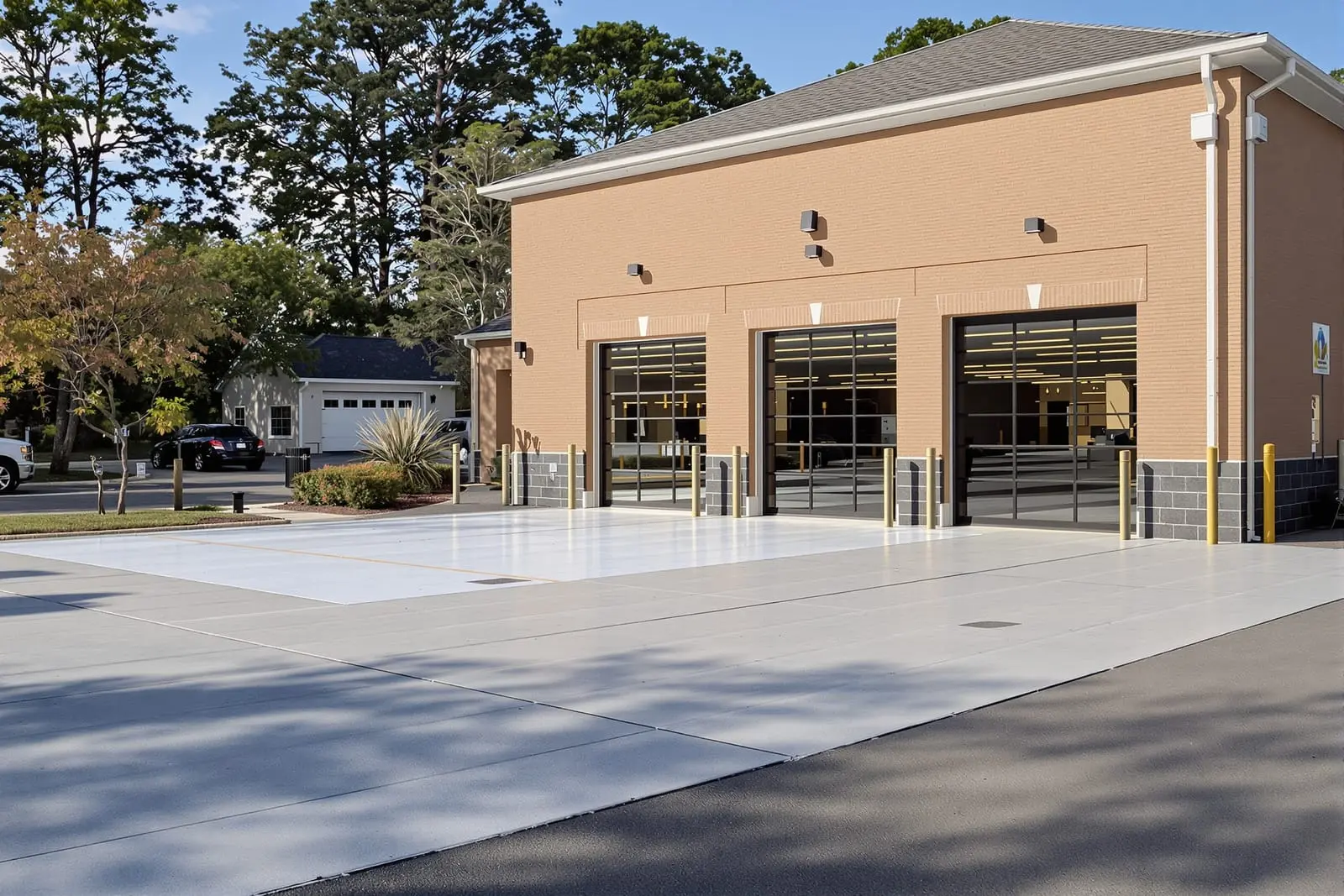
We pour loading docks and commercial slabs in Omaha, NE for warehouses, shops, and retailers. Our team builds thick, reinforced concrete surfaces that support trucks, forklifts, and heavy equipment. We coordinate dock heights, bollards, and joint layouts to match your building and operations. Rely on properly engineered commercial concrete slabs for safe daily use.
Primetime Concrete Omaha provides professional commercial concrete slab throughout Omaha, NE and the surrounding area. Our licensed, insured crew delivers safe, clean, on-time work with a free estimate before anything begins. Call (402) 838-2266 or request your free quote.
Commercial Concrete Slabs Built for Omaha Workloads
Primetime Concrete Omaha designs and installs commercial concrete slabs that are built around how your operation actually runs, not just what looks good on a plan. Whether you need a loading dock for semi trailers, a slab for forklift traffic, or a floor for a new warehouse bay, we start by understanding your equipment, traffic patterns, and future expansion plans.
Omaha’s freeze and thaw cycles are tough on slabs. We account for this up front with proper base prep, joint layout, and reinforcement so you are not dealing with curling, heaving, or cracked dock aprons in a few seasons. Our crews routinely work in active industrial yards and retail back-of-house areas, so we schedule pours and sawcutting around your deliveries and customer traffic.
Because we are local, we are familiar with how Douglas County inspections, city engineering requirements, and nearby jurisdictions treat commercial concrete slab work. We coordinate with your GC, architect, or facility manager so your loading docks and slabs meet both code and your insurer’s expectations for impact and load capacity.
Site Evaluation and Design for Loading Docks
A durable loading dock starts with a careful look at site conditions, not just a standard detail. Primetime Concrete Omaha evaluates soil type, drainage paths, existing pavement, and the turning radius of trucks using your dock. We check overhead clearances, nearby doors, and where snow piles in winter, since meltwater often runs right toward dock approaches.
We help you choose between flush docks, depressed docks, and raised platforms depending on your mix of trailers and box trucks. For many Omaha facilities, a combination of recessed dock wells for semis and a ground level roll up door for vans is the most practical setup. We design the concrete slab thickness, reinforcement, and dock face to handle impact from trailers and dock plates without spalling or settling.
If you are replacing a heaved or settled dock apron, we investigate drainage and base failures, often the original slab is too thin or lacks dowels tying it into the building slab. Our replacement designs typically include thicker sections at the dock face, additional reinforcing steel or heavy wire mesh, and well placed control joints to manage cracking where trucks repeatedly drop trailer legs.
Base Preparation, Reinforcement, and Thickness Options
The most common reason commercial slabs fail early in Omaha is not the concrete mix, it is what is under it. Primetime Concrete Omaha begins with excavation to remove unsuitable soils and old broken concrete. We then install and compact a graded aggregate base, usually crushed concrete or limestone, in multiple lifts that are tested for compaction where required.
For loading docks and high traffic commercial slabs, 6 to 8 inches of concrete is typical, with thicker sections at truck wheel paths and dock faces. Lighter duty slabs, such as dumpster pads for smaller containers or walk up delivery areas, may be designed at 5 inches if soil and usage allow. We specify rebar grids or welded wire reinforcement based on your traffic load, slab size, and joint spacing, not a one size fits all template.
We also consider subgrade moisture and drainage. If your site has poor draining clay, we may recommend underdrain or a thicker granular base to protect against frost movement. For interior slabs that connect to loading docks, we coordinate elevations to minimize trip hazards and allow for dock leveler equipment while still maintaining adequate slab thickness at thresholds.
Concrete Placement, Finishing, and Joint Layout
On pour day, Primetime Concrete Omaha manages concrete placement so the slab is poured continuously and finished consistently. We typically use ready mix designs in the 4,000 to 5,000 psi range for commercial concrete slabs and loading dock aprons, often with air entrainment to handle exposure to freeze, deicing salts, and snow removal equipment.
We plan truck access routes in your yard in advance so our mixer trucks do not damage existing pavement or landscaping. Once the concrete is placed, our finishers use screeds, bull floats, and where needed laser guided equipment to achieve the correct slope away from buildings and dock doors. For exterior loading areas we usually recommend a broom finish for traction, while interior slabs may receive a troweled finish suitable for forklifts and pallet jacks.
Control joints and construction joints are critical in commercial slabs. We sawcut or form joints at calculated spacings based on slab thickness and panel size, and we pay special attention to joints where heavy wheel loads will cross. In these locations we often use dowel bars or keyways to transfer load and reduce vertical movement that can create bumps for forklifts or damage palletized goods.
Dealing With Common Loading Dock and Slab Problems
Many of our projects in Omaha involve correcting problems from earlier, underbuilt concrete work. Typical issues include broken slab edges where trailers back against them, ponding water in front of dock doors, and settlement where base materials were not compacted correctly. Primetime Concrete Omaha starts these projects with a core sample and visual inspection so we understand thickness, reinforcement, and base conditions before proposing a fix.
Repairs can range from partial depth patching of spalled surfaces to full depth replacement of failed panels. When we replace sections, we dowel new concrete into adjacent sound slabs to prevent differential movement. In front of dock doors where water has historically collected and frozen, we adjust slopes and may add trench drains or surface inlets tied into your existing storm system, or install new drainage if needed.
If you have slabs that are cracking in a pattern that suggests subgrade issues, we may recommend soil stabilization or reworking the base rather than simply repouring at the same elevation. We aim to solve the root causes, such as downspouts discharging on the slab or poor snow storage practices, and we will point these out so your maintenance team can prevent repeat failures.
Permitting, Codes, and Local Requirements in Omaha
In the Omaha area, many loading dock and commercial slab projects require coordination with the city or county, especially if you are altering drainage patterns, adding square footage, or tying into public sidewalks and right of way. Primetime Concrete Omaha is familiar with local permitting thresholds, site plan requirements, and inspection processes for commercial properties.
For larger projects, we work with your civil engineer or architect to ensure concrete thicknesses, reinforcement details, and slopes meet plan specifications and local building code. Where inspections are required, such as footing or subgrade checks and pre pour reviews, we schedule these with inspectors so your project stays on track.
If your property is in a business park or HOA controlled commercial development, there may be appearance and access standards for loading areas, dumpster pads, and truck circulation. We help you interpret these documents and propose slab layouts, screening walls, or approaches that keep you in compliance without sacrificing function for your logistics or tenant operations.
What Affects Cost and How to Plan Your Project
The cost of a commercial concrete slab or loading dock in Omaha depends on more than just square footage. Thickness, reinforcement type, base preparation, access for trucks and equipment, and required drainage improvements all play major roles. Primetime Concrete Omaha explains these cost drivers in plain terms so you can make informed decisions and prioritize where to invest.
For example, a slab that sees daily semi trailer traffic will typically require thicker sections, more rebar, and better base material than a light duty delivery pad. If your site is tight or requires concrete to be pumped instead of discharged directly from the truck, that added equipment time will affect pricing. Winter work may require concrete blankets and cold weather admixtures, which we will discuss before scheduling.
To keep your operation running, we can phase work so only part of your dock line or slab area is out of service at a time. Many Omaha businesses choose to tackle high risk or high traffic areas first, then budget for additional phases as seasons or tenant needs change. When we meet on site, we will walk through your loading patterns, equipment, and future plans so you get a commercial concrete slab solution that fits your long term operations, not just a quick patch.
“
Professional loading docks & commercial slabs, done right the first time, quality materials, honest pricing, and results that last.
Primetime Concrete Omaha
Loading Docks & Commercial Slabs Across Our Service Area