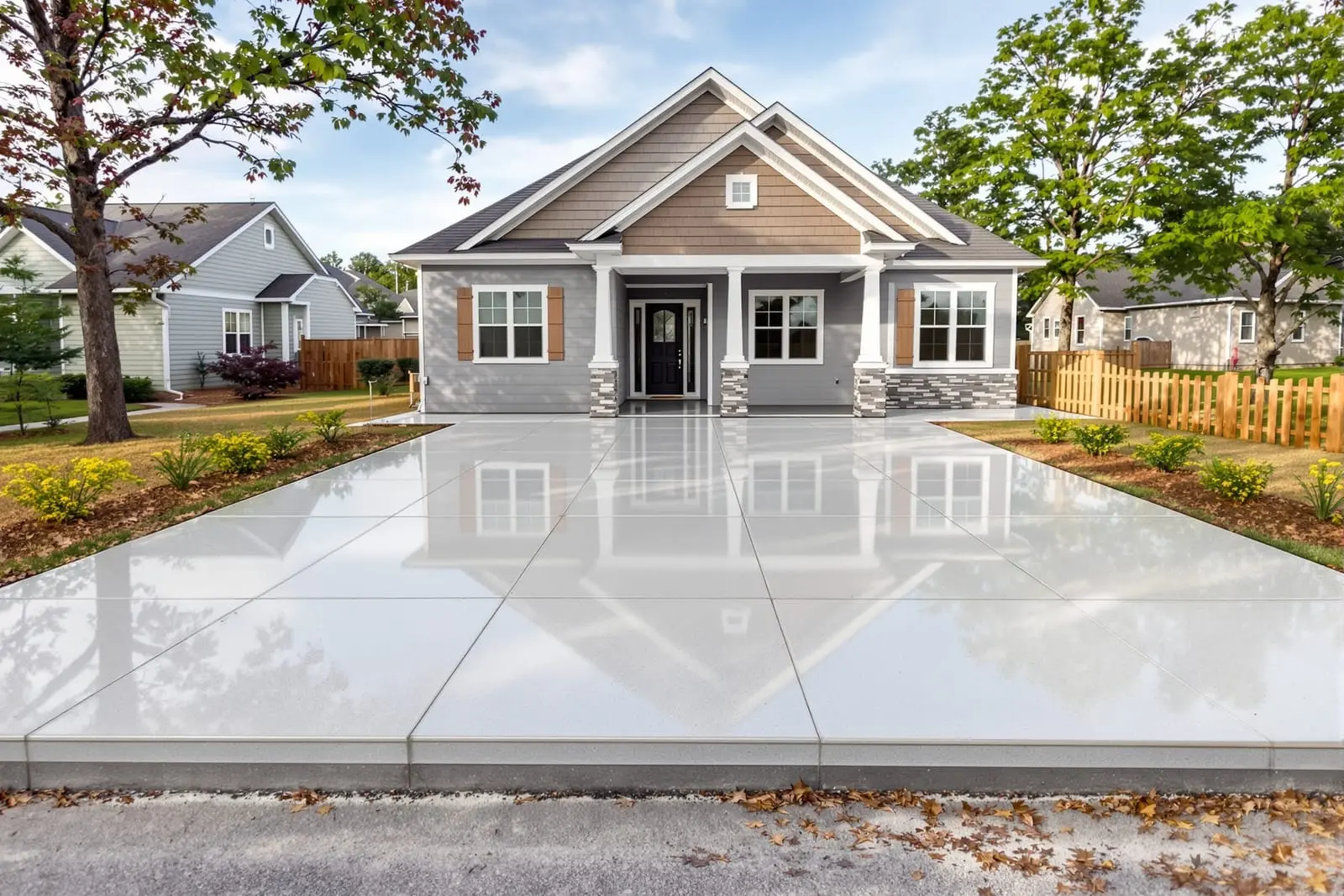
Build on a solid base with professional concrete slab installation in Omaha, NE. We pour level, reinforced slabs for sheds, garages, and room additions. Our team handles site prep, forming, and finishing so your structure sits on a strong, long lasting foundation.
Primetime Concrete Omaha provides professional concrete slab installation throughout Omaha, NE and the surrounding area. Our licensed, insured crew delivers safe, clean, on-time work with a free estimate before anything begins. Call (402) 838-2266 or request your free quote.
Concrete slab installation in Omaha tailored to your property
Concrete slab installation is the foundation for everything from garages and driveways to sheds and room additions. At Primetime Concrete Omaha, we focus on getting the fundamentals right for our local climate and soil so your slab stays level, drains correctly, and resists cracking for years.
When you call us, we start with a site visit anywhere in the Omaha metro. We look at access for trucks, how water currently drains across your yard, existing structures, and nearby trees or retaining walls. For many Omaha lots, small elevation changes or clay pockets can cause future slab movement if they are not accounted for at the start. We measure, mark out the exact slab footprint, and talk through how you plan to use the space so the slab thickness and reinforcement match your needs.
We also discuss future plans. If you think you might build walls on the slab later, we design for that load now. If you want to park heavy pickups or trailers, we adjust the mix design, slab thickness, and reinforcement pattern. This early planning is where many problems are avoided, and it is a step Primetime Concrete Omaha never rushes.
How we design and prepare your slab for Omaha soil and weather
Good concrete slab installation starts before a single yard of concrete is poured. Omaha has a mix of loam and heavy clay soils, plus freeze-thaw cycles that can heave poorly prepared slabs. Our crews strip sod and organic material, then proof-roll or compact the subgrade so we are not building on soft or unstable spots.
In many neighborhoods, especially West Omaha and certain parts of Bellevue and Papillion, we see pockets of expansive clay. In these cases, we may over-excavate a few extra inches and bring in compacted crushed rock or gravel to create a more stable base. This reduces differential movement and limits cracking. For patios or sheds, a 4 inch slab over a 4 inch compacted base is typical. For garages or heavier use, 5 to 6 inches of slab and a thicker base are often recommended.
We install forms to establish the slab perimeter and slope. In Omaha, we usually pitch exterior slabs 1/8 to 1/4 inch per foot away from the house to keep water moving away from foundations. For interior slabs or room additions, we coordinate with your contractor or plumber for any floor drains, sump pits, or utility penetrations so they are locked in before the pour. Proper prep is what keeps slabs from settling, tilting, or trapping water against your home.
Reinforcement, concrete mix choices, and crack control
Reinforcement and the right concrete mix are key parts of long lasting concrete slab installation. We commonly use rebar, welded wire mesh, or a combination, depending on the slab size and expected loads. For driveways or garage slabs in Omaha, we often use #3 or #4 rebar on a grid pattern, tied and supported on chairs so it stays centered in the slab instead of sinking to the bottom.
We typically pour a 4,000 psi concrete mix for most residential slabs, with air entrainment to handle freeze-thaw cycles and deicing chemicals. This helps the slab withstand Omaha winters and the use of salt on driveways. For projects that require faster use, such as commercial entries, we can specify mixes with accelerators so the surface is ready for traffic sooner, without compromising strength.
Cracks can never be completely eliminated in concrete, but they can be controlled. We cut control joints at the right spacing and depth, usually within 6 to 12 hours of the pour depending on weather. This encourages hairline cracking to occur inside those joints where it is less noticeable and less harmful. Around door openings or corners, we add extra reinforcement or adjust joint locations so random cracks are less likely.
What to expect on pour day and finishing your concrete slab
On pour day, Primetime Concrete Omaha coordinates concrete trucks so the mix arrives on time and within the correct slump range. Too much water in the mix is a common shortcut that leads to weaker slabs and more cracking. We work with local Omaha batch plants and request a mix designed for your specific application and time of year.
Our crew places the concrete, vibrates or rods it around rebar to remove trapped air, and screeds it to the planned elevation and slope. We then bull float to embed aggregate and bring cement paste to the surface for finishing. For most garage and interior slabs, we recommend a smooth trowel finish. For exterior slabs like driveways, sidewalks, or patios, a broom finish is usually best. The fine texture improves traction in icy Nebraska winters and reduces slipperiness.
If you want something more decorative, we can incorporate integral color, saw cut patterns, or a light exposed aggregate finish during the slab installation process. We also pay close attention to edges and transitions, such as tying into existing driveways or garage floors, so there are no tripping hazards or awkward lips. By the end of the day, we leave you with clear guidance on when you can walk on the slab and when heavier loads are safe.
Curing, sealing, and long term performance in Omaha
Proper curing is one of the most important parts of concrete slab installation, but it is often overlooked. Concrete in Omaha must be protected from rapid drying in hot, windy summers and from freezing in cold months. We typically apply a curing compound or use wet curing methods to keep moisture in the slab during the first crucial days.
In the summer, we may schedule pours earlier in the morning and use evaporation reducers or curing blankets when needed. In fall and early spring, if temperatures are near freezing, we use insulated blankets or temporary heat to keep the concrete in a safe temperature range. These steps help the slab gain full strength and reduce surface dusting and scaling.
Once the slab has cured, we often recommend sealing exterior slabs. A quality penetrating sealer helps resist moisture penetration, road salt, and staining. This can make a big difference for driveway slabs that will see winter deicers and street runoff. We explain when to reseal, how to avoid using harsh chemicals on young concrete, and what normal aging looks like compared to a problem that needs repair.
Pricing, timelines, and how Primetime Concrete Omaha helps you plan
Homeowners often ask what drives the cost of concrete slab installation. The main factors are slab size and thickness, site access, base preparation needs, reinforcement type, and any decorative elements. Tight backyards in older Omaha neighborhoods may require extra labor to move concrete with buggies or pumps, which can affect price. Poor existing soil or the need for additional base rock can also influence the budget.
During your estimate, we measure the area, discuss your intended use, and inspect the site so we can give a clear, itemized quote. We explain what is included, such as demolition of old concrete if needed, hauling, base material, reinforcement, joints, finishing, and cleanup. Our goal is to help you make informed choices, not push the most expensive option.
Typical residential slab projects, such as a driveway section, small garage slab, or patio, can often be formed and poured in one to two days, with additional time for curing before heavy use. Larger projects or jobs that tie into new construction may follow your builder’s schedule.
Primetime Concrete Omaha is a local company, so we plan around real Omaha conditions: busy city streets during Husker game days, seasonal weather swings, and local code requirements. We communicate clearly from the first visit through final walkthrough so you always know what is happening next and what to expect from your new concrete slab.
“
Professional concrete slab installation, done right the first time, quality materials, honest pricing, and results that last.
Primetime Concrete Omaha
Concrete Slab Installation Across Our Service Area