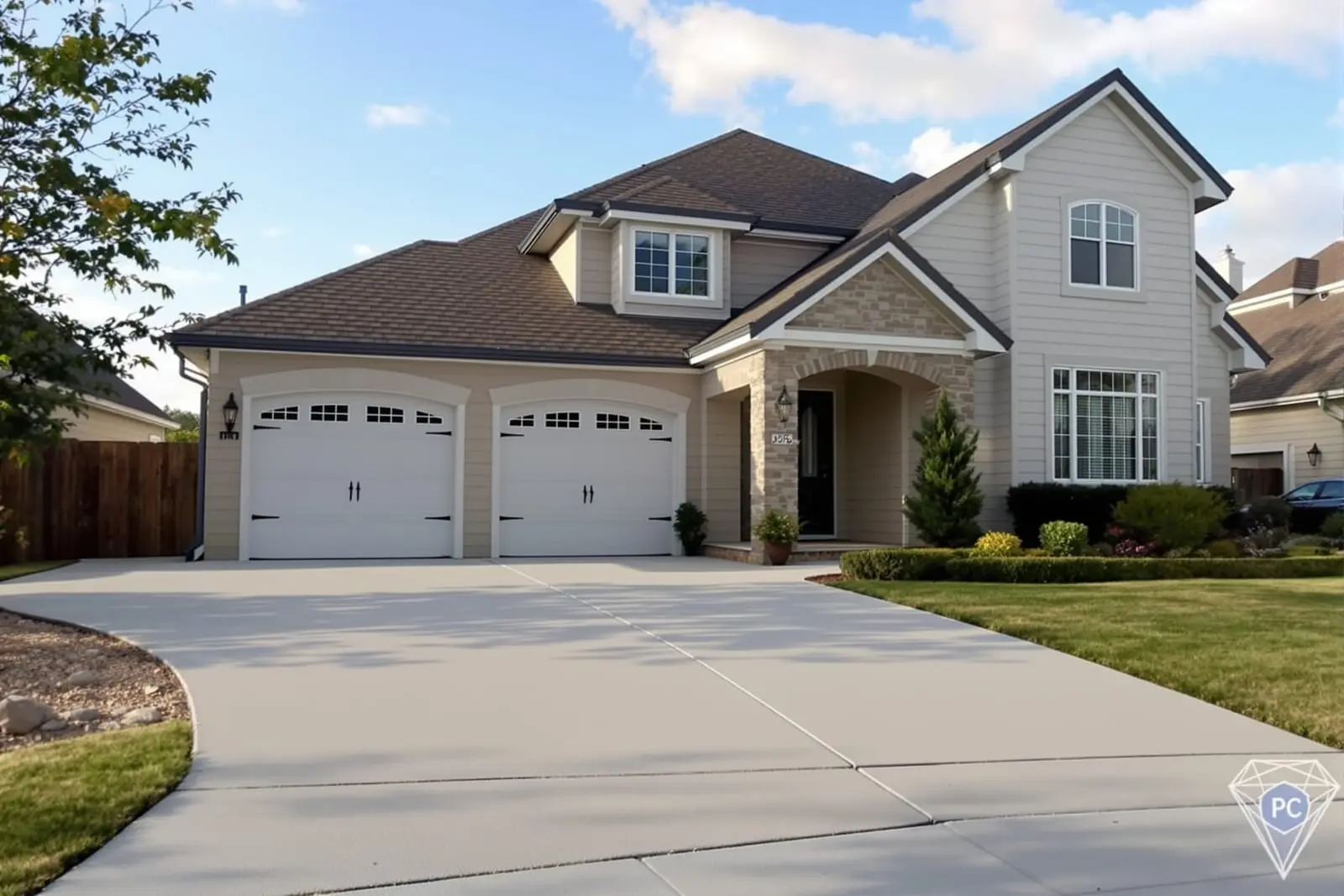
We offer concrete repair and resurfacing in Omaha, NE to restore worn or damaged surfaces around your property. Our team handles crack repair, patching, and leveling for driveways, sidewalks, patios, and slabs. When surfaces are heavily aged, we apply resurfacing systems that create a fresh, uniform finish. Improve safety and appearance with affordable concrete repairs that extend the life of your flatwork.
Primetime Concrete Omaha provides professional concrete repair throughout Omaha, NE and the surrounding area. Our licensed, insured crew delivers safe, clean, on-time work with a free estimate before anything begins. Call (402) 838-2266 or request your free quote.
Concrete repair in Omaha that actually lasts
If you own a home or commercial property in Omaha, you already know what our freeze-thaw winters, summer heat, and clay-heavy soil do to concrete. At Primetime Concrete Omaha, we focus on concrete repair and resurfacing that holds up to local conditions, not just a quick patch that flakes off in a year.
Before we recommend any repair, we look at why the concrete failed. Hairline cracks from surface shrinkage call for a different approach than a heaved driveway panel or a spalling front stoop. We check for drainage problems, salt damage, subgrade settlement, and whether the slab is still structurally sound. That inspection is what tells us if you only need a surface repair, a full-depth replacement of a section, or a resurfacing system across the entire slab.
Most of the time in Omaha we are dealing with frost movement, deicing salt damage from winter, and poor downspout placement that lets water wash out the base. Primetime Concrete Omaha will walk the area with you, explain what is causing the damage in plain language, and give you options. Sometimes a targeted concrete repair plus better drainage is all you need. Other times, resurfacing the whole area with a bonded overlay makes more sense than chasing cracks one by one.
How our concrete repair process works
Good concrete repair is more than throwing patch mix in a crack. Our process is built around surface prep and compatibility so the repair bonds tightly and cures correctly.
Step 1 is cleaning and evaluation. We mechanically clean the surface with wire wheels or grinding equipment, and for larger jobs we often use pressure washing to remove dirt, sealers, and loose material. This lets us see the full extent of cracking, hollow spots, and delamination.
Step 2 is concrete removal and crack prep. For spalled or loose concrete we chip back to solid material with chipping hammers and chisels. On cracks, we usually rout them slightly wider in a controlled way so repair materials can get deep enough to hold. If we find voids under the slab (common when gutters dump right at the edge of a driveway), we may recommend slab lifting or pressure grouting to support the repair.
Step 3 is choosing and installing the right repair material. For structural cracks we often use high strength repair mortar or epoxy injection if the slab is still in one piece. For surface spalling we use polymer-modified repair mortars that flex a bit with Omaha temperature swings and bond better to the old concrete. We apply bonding agents where needed, then place and finish the repair to blend with the existing surface so you are not left with obvious humps or dips.
Step 4 is curing and sealing. Omaha’s climate makes curing important, especially in spring and fall. We schedule work to avoid sudden freezes or high heat when possible, and we use curing compounds or coverings so the repair gains proper strength. Once cured, we often recommend a penetrating sealer to protect from salt and moisture, particularly on driveways, walkways, and front steps.
Concrete resurfacing when a patch is not enough
If your concrete is generally solid but looks worn, stained, or lightly pitted, resurfacing can give it a fresh surface without full replacement. Primetime Concrete Omaha uses overlay systems made for our climate so they stay bonded and resist peeling.
We start resurfacing the same way we start repair, with aggressive cleaning and prep. Typically we grind or shot-blast the slab to open the surface and remove coatings, paints, and weak concrete. This step is critical. A resurfacing product is only as good as what it sticks to.
For basic resurfacing, we install a thin polymer-modified overlay across the slab, usually from 1/16 to 1/4 inch thick. It is squeegeed or troweled on, then broomed or textured for slip resistance. On driveways and walks we usually recommend a broom or light texture finish so it is safe in Omaha winters when things get icy.
If you want something decorative, overlays can be colored, stained, or stamped. We can mimic the look of stone, tile, or slate on patios and entries, or simply give your garage floor a uniform, clean gray. We use UV stable color systems so they hold up to Nebraska sun. For high traffic commercial entries, we often suggest a heavier build overlay with added sand for traction.
We also pay attention to control joints. During resurfacing we re-cut or reform joints so the concrete beneath can keep moving without forcing random cracks through the new surface. Finally, we seal the overlay with a product matched to how the slab will be used, for example a more chemical resistant sealer for garage floors and a breathable sealer for exterior walkways.
What affects the cost of concrete repair in Omaha
Homeowners often ask why two driveways with the same square footage can have very different repair prices. The cost of concrete repair and resurfacing in Omaha is driven more by condition and access than by size alone.
Thickness and severity of damage matter a lot. A driveway with shallow surface scaling might be a good candidate for resurfacing, which is generally more affordable per square foot than cutting out and replacing multiple panels. If we find deep cracks, hollow sounding areas, or significant heaving from tree roots, we may need to remove and replace sections, which adds labor, disposal, and new concrete.
Access and layout also affect price. Tight backyards, steep slopes, or areas that require hand mixing instead of truck delivery will cost more than a straight shot from the street. Working around existing landscaping, fencing, or irrigation lines adds time because we have to protect those items while we work.
Season and schedule can play a role as well. In Omaha, the best window for concrete repair and resurfacing is typically April through October when nighttime temperatures stay well above freezing. We can work outside those months with the right products and protection, but cold weather setups and heating the work area add cost.
When Primetime Concrete Omaha gives you a quote, we break these factors down. You will see the difference between spot repairs and full resurfacing, you will know what is optional and what is necessary to avoid doing the same repair twice, and you will understand where you can save money, for example by handling minor site prep like moving patio furniture and planters yourself.
What Omaha property owners should know before hiring
Before you hire anyone for concrete repair or resurfacing, there are a few local realities to keep in mind. First, no contractor can honestly promise that concrete will never crack. What we can do is control where it is most likely to crack, how wide those cracks become, and how well the surface stands up to the environment.
Ask how the contractor plans to address the cause of the damage, not just the symptom. If your driveway keeps crumbling at the street, we will look at gutter discharge, road salt exposure, and the thickness of the slab at that joint. If your front steps are settling, we will look for voids under the stoop and nearby downspouts, not just smear patch on the face.
Also ask about surface prep and product choices. In our climate, surface prep is non negotiable for lasting repairs, and the repair materials must be compatible with freeze-thaw cycles and deicer exposure. Primetime Concrete Omaha uses mixes specified for our temperature swings, and we will tell you exactly what we are using and why.
Scheduling is another factor. In Omaha, early morning starts in summer help us finish and cure concrete before peak heat, while spring and fall work is timed around overnight lows. We will be honest if the weather is not right for the work you want, and we would rather delay a job by a week than rush it on a bad weather day.
Finally, make sure you know what kind of maintenance is recommended after repair or resurfacing. We typically suggest resealing exterior surfaces every 2 to 4 years, avoiding harsh deicers the first winter after work, and keeping joints and cracks sealed so water does not get under your slab. With those basics, a quality repair or resurfacing from Primetime Concrete Omaha can give you many more years out of your existing concrete.
“
Professional concrete repair & resurfacing, done right the first time, quality materials, honest pricing, and results that last.
Primetime Concrete Omaha
Concrete Repair & Resurfacing Across Our Service Area