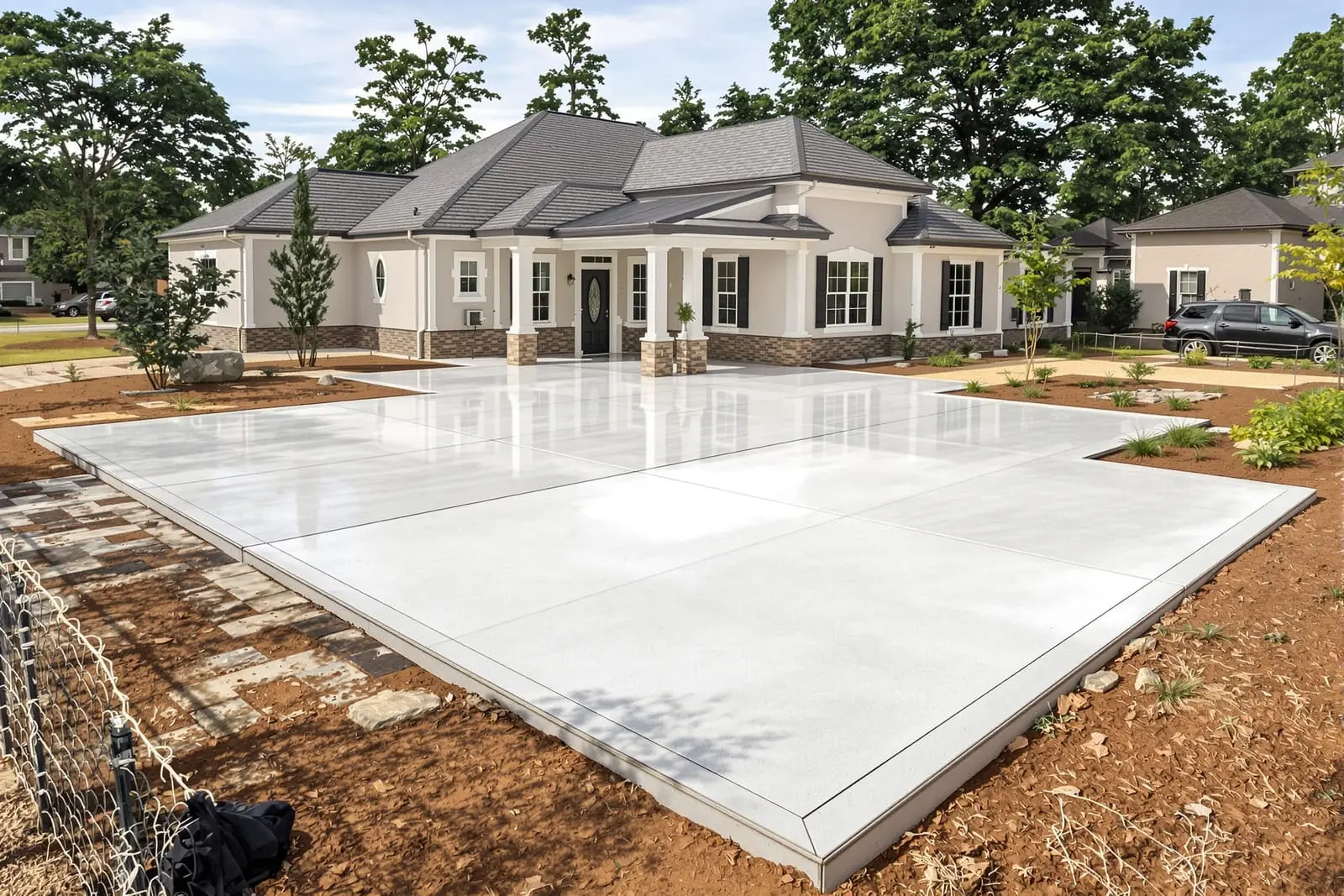
Get reliable support systems with structural concrete services in Omaha, NE. We construct piers, grade beams, equipment foundations, and walls per engineered designs. Our team coordinates with other trades to keep sitework and structural pours on schedule and within spec.
Primetime Concrete Omaha provides professional structural concrete throughout Omaha, NE and the surrounding area. Our licensed, insured crew delivers safe, clean, on-time work with a free estimate before anything begins. Call (402) 838-2266 or request your free quote.
Sitework & Structural Concrete Services in Omaha
Sitework and structural concrete is the part of your project that everything else depends on. At Primetime Concrete Omaha, we help homeowners, builders, and small commercial owners get the “invisible” parts of the job done right so you are not fighting cracks, settling, or drainage issues a few years later.
In practical terms, sitework usually starts before any walls go up. We look at your lot grading, soil conditions, access for trucks and equipment, and how water naturally moves across your property. For structural concrete, we handle things like footings, foundations, load bearing slabs, garage floors, structural patios and steps, and thickened edge slabs for sheds or additions.
Because we work only in the Omaha area, we design and pour with our local soil and freeze-thaw cycles in mind. That means footing depths that meet local code, reinforcement that matches the real loads, and concrete mixes that handle Nebraska winters instead of just looking good on day one.
How We Approach Sitework on Omaha Properties
Good structural concrete starts with proper sitework. Primetime Concrete Omaha begins with a walkthrough of your property, checking elevation, soft spots in the soil, access for concrete trucks, and where future landscaping or driveways will tie in. We listen to your plans, then look at how to support them from the ground up.
Grading is first. We set up a laser level or transit to establish correct slopes away from your home or building. Typically, we aim for at least a 6 inch drop over the first 10 feet around foundations to help keep basements and crawlspaces dry. On existing homes, this might mean cutting back high spots near the foundation, importing compactable fill where needed, and tying downspouts into splash blocks or buried drains so water does not run back toward your structure.
Subgrade preparation is next. We remove organic material like topsoil and roots, then evaluate the subsoil. In many parts of Omaha, you will find loess soils that can be strong when properly compacted but soft when wet. Where soil is weak or was previously disturbed (for example, an old garden bed or backfilled trench), we may over-excavate and replace with compacted crushed rock or engineered fill. We compact in lifts with plate compactors or rollers to reduce later settlement.
Before any concrete is poured, we coordinate with you or your contractor on utilities. That can include protecting water and sewer lines, verifying depths, and making sure any sleeves for future electrical or irrigation are in place under driveways or slabs so you are not cutting fresh concrete later just to run a wire.
What Structural Concrete Includes and How We Build It
Structural concrete is not just a slab to park on. It is every piece of concrete that carries load from your building into the ground. For most Omaha projects, this includes continuous footings, foundation walls or stem walls, structural slabs on grade, and sometimes piers or thickened slab sections.
For footings, we layout with string lines and stakes so the concrete is exactly where your plans call for it. Typical residential footing sizes in our area are often 16 to 24 inches wide and 8 to 12 inches thick, but the final size depends on the load and soil bearing capacity. We set rebar cages or grids per design, usually two rows of #4 or #5 bar, and tie them so they stay in place when the concrete is placed.
Foundation walls might be poured or block, but our focus is on poured structural concrete. We set forms to the correct height and thickness, often 8 inch walls for standard basements. Rebar is placed vertically and horizontally inside the forms according to engineering. Anchor bolts and any steel columns are located precisely so framing lines up later. We use internal and external vibrators to consolidate the concrete and reduce voids, which is especially important in cold basements where moisture issues can show up in honeycombed or poorly consolidated walls.
For structural slabs, such as garage floors, shop floors, and some basements, we pay close attention to base preparation, vapor barriers, and reinforcement. Depending on the application, reinforcement may be rebar, wire mesh, or fiber-reinforced concrete, or a combination. Control joints are cut or tooled at planned intervals to guide where cracks form as the concrete cures. In garages and shops, we often thicken the slab around posts, vehicle lifts, or heavy equipment pads so loads have proper support instead of relying on the same thin section everywhere.
Costs, Options, and Common Problems We Solve
Several factors drive the cost of sitework and structural concrete in Omaha, and it helps to understand them before you start getting bids.
Site access is one of the biggest. If we can back a concrete truck close to the pour, costs are lower. If we need to pump concrete over a house or long distance, or wheelbarrow it through tight spaces, that adds time, labor, and equipment. Similarly, steep or very wet lots often require extra grading, drainage work, or rock base.
Soil conditions also matter. Soft, expansive, or previously disturbed soils may require over-excavation and engineered fill. This adds material and compaction time but can prevent costly settling or slab heaving later. In many older Omaha neighborhoods, buried debris or old foundations occasionally turn up. When this happens, Primetime Concrete Omaha will show you the issue, explain the options, and adjust the plan so you know exactly what is being done and why.
Concrete mix designs and reinforcement choices affect cost and performance too. A higher strength mix, air entrainment for freeze-thaw resistance, additional rebar, or thicker sections will cost more up front but usually perform better, especially in garages, driveways, and patios that see winter freeze, salt, and heavy vehicles. We discuss where it makes sense to upgrade and where a standard mix is perfectly adequate.
Common problems we are called to fix include settled garage slabs, water pooling near foundations, cracked basement floors, or heaved exterior steps. While not every existing problem can be corrected with concrete alone, good sitework and properly reinforced structural pours greatly reduce the chances that you will face these issues on a new project.
Timing, Permits, and What Omaha Owners Should Expect
In the Omaha climate, timing matters. The most reliable window for sitework and structural concrete is typically April through early November, when ground is not frozen and daytime highs allow proper curing. We do pour in colder months with the right precautions, such as insulating blankets, heated enclosures, and cold weather admixtures, but this can affect scheduling and cost.
Before we mobilize, we help you confirm what permits your project needs. New foundations, additions, and structural slabs usually require permits and inspections from the City of Omaha or the appropriate Sarpy or Douglas County authority. Primetime Concrete Omaha coordinates with inspectors on footing and foundation checks so you are not stuck trying to decode local requirements alone.
On pour day, you can expect some noise and truck traffic, but we keep things as orderly as possible. We typically:
1) Verify layout and elevations.
2) Double check reinforcement and forms.
3) Place and finish the concrete.
4) Install control joints and apply curing methods such as curing compound or coverings.
5) Clean up and secure the site.
Afterward, we give you clear instructions on when you can walk, frame, or drive on the new concrete. For many structural slabs, light foot traffic is allowed after 24 hours, framing can often start after a couple of days, and vehicle loads usually wait a week or more depending on thickness and mix. We also discuss sealing options where appropriate, especially in garages and exterior flatwork exposed to deicing salts.
The goal is simple: you should end up with foundations and structural slabs that quietly do their job for decades, supporting whatever you build on top without constant worry or repairs.
“
Professional sitework & structural concrete, done right the first time, quality materials, honest pricing, and results that last.
Primetime Concrete Omaha
Sitework & Structural Concrete Across Our Service Area